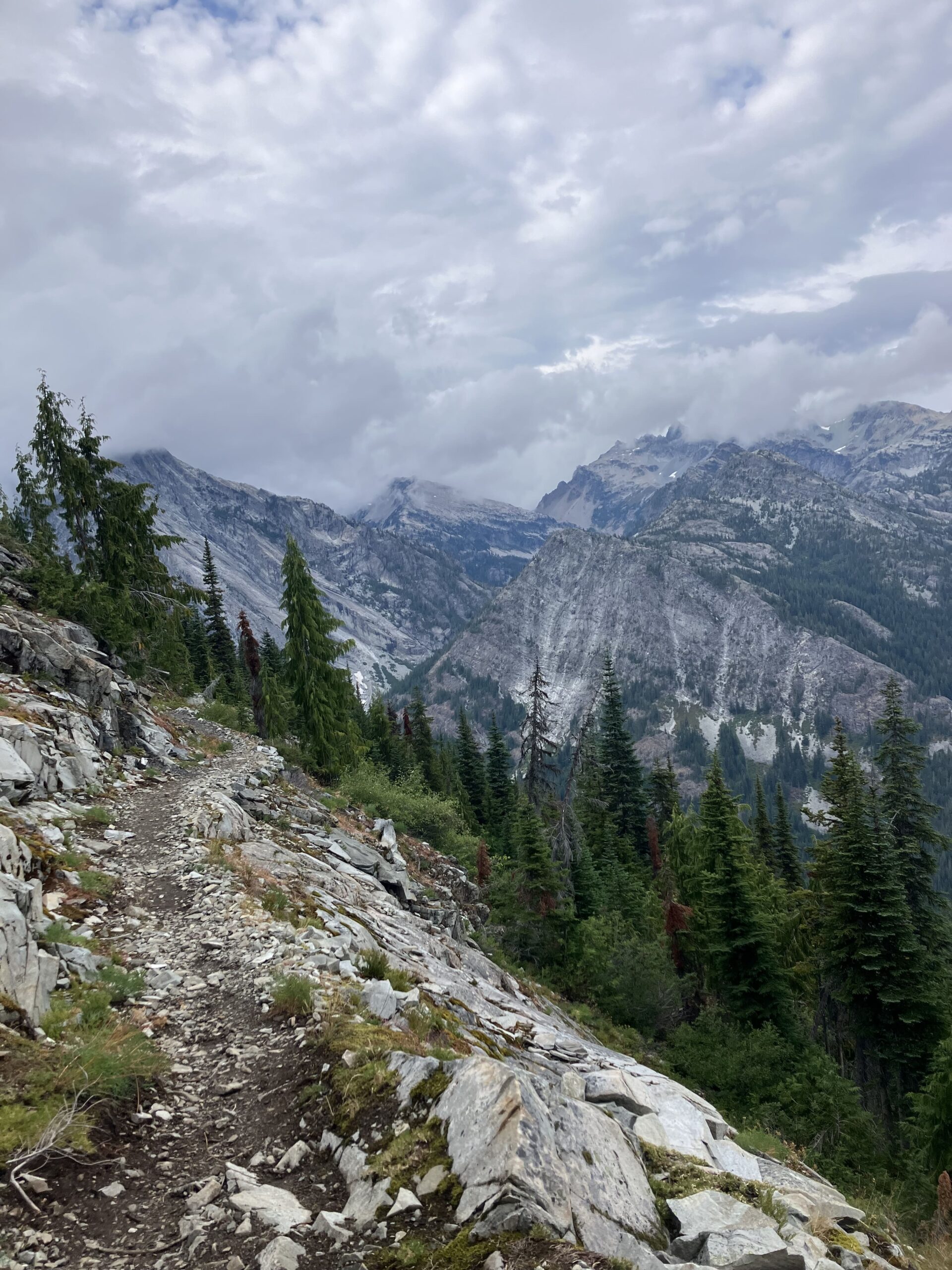
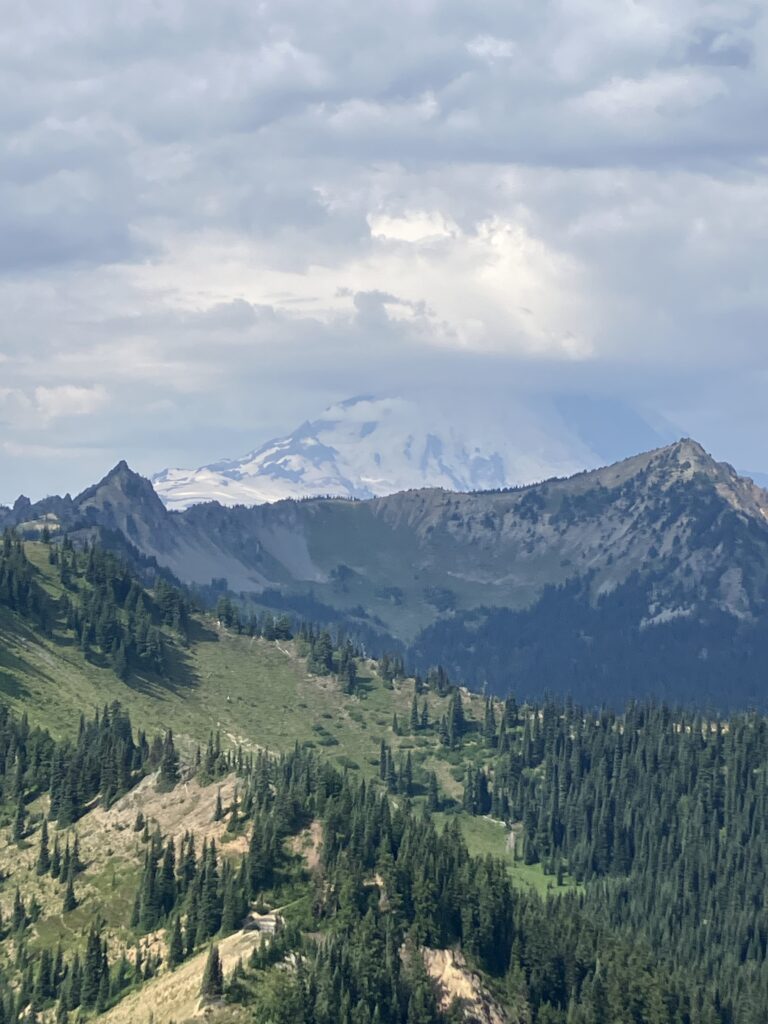
I wasn’t sure how easy it would be to get a ride back to the PCT from the park, early on a Saturday morning, but I was able to get one surprisingly quickly. It had been nice to have something of a break, but now it was back to heading north. That weekend was PCT Trail Days in Cascade Locks, so between hikers going back to that and people not doing Washington, the trail was pretty quiet. The section immediately after Chinook Pass was very pretty, a nice ridge line walk with some decent views of Rainier (still somewhat in the clouds). However, soon after passing by the Crystal Mountain ski area, the trail entered a really long burned area which was less nice. At this point in the trail, after passing by so many active fires and burned areas, I seemed to have developed an instinctive and very strong negative feeling going through the burn zones. I was just really tired of it. This took up most of the day, but I eventually got through it in the afternoon. The forecast had called for thunderstorms but by the end of the day, nothing had materialized. I thought that maybe I’d gotten lucky and it wouldn’t storm after all, but alas, the timeline had just moved to the evening. I managed to get my tent set up and was safely inside when it started raining. Unlike the light, persistent drizzle I’d mostly been dealing with in Washington so far, this was real rain and a real thunderstorm. It wasn’t super close to me, so it wasn’t particularly concerning, though my tent, being pretty old, had developed at least one leak. However, some things being mildly damp, with me being totally warm and dry enough, was still a huge success for the amount of water coming out of the sky. Luckily the next day was dryer, with some sun, and I was able to dry my things during an afternoon break. Every person I passed kept commenting on the “crazy” storm, and I nodded along, though internally, I thought, I don’t know, it was a normal storm.
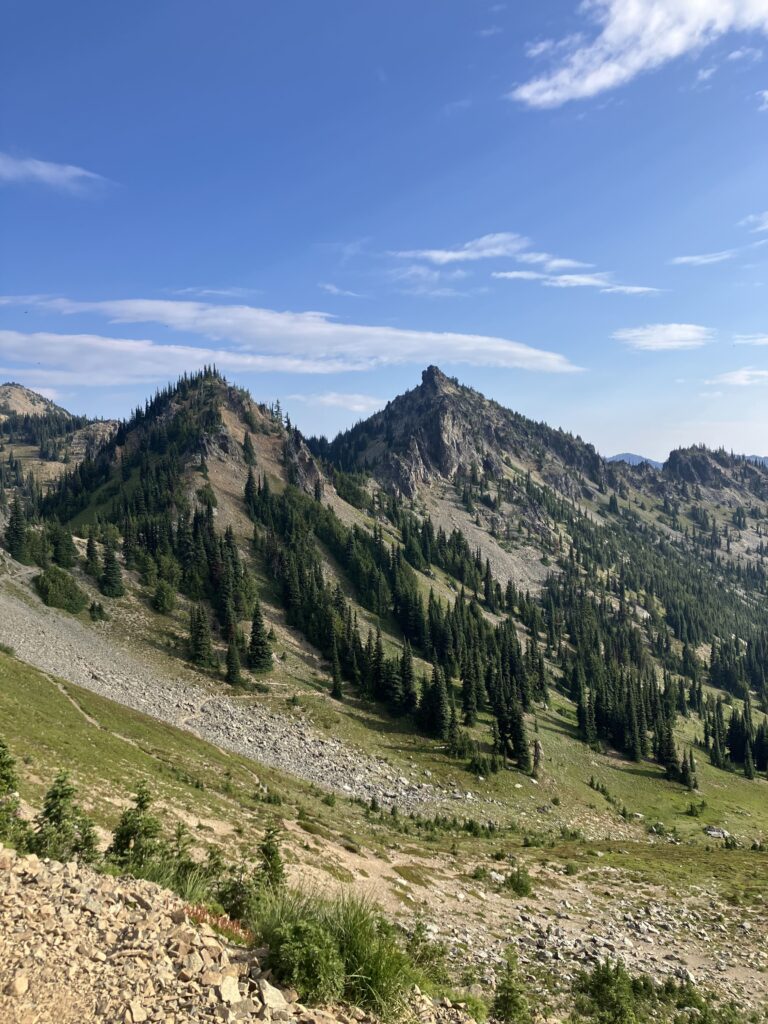
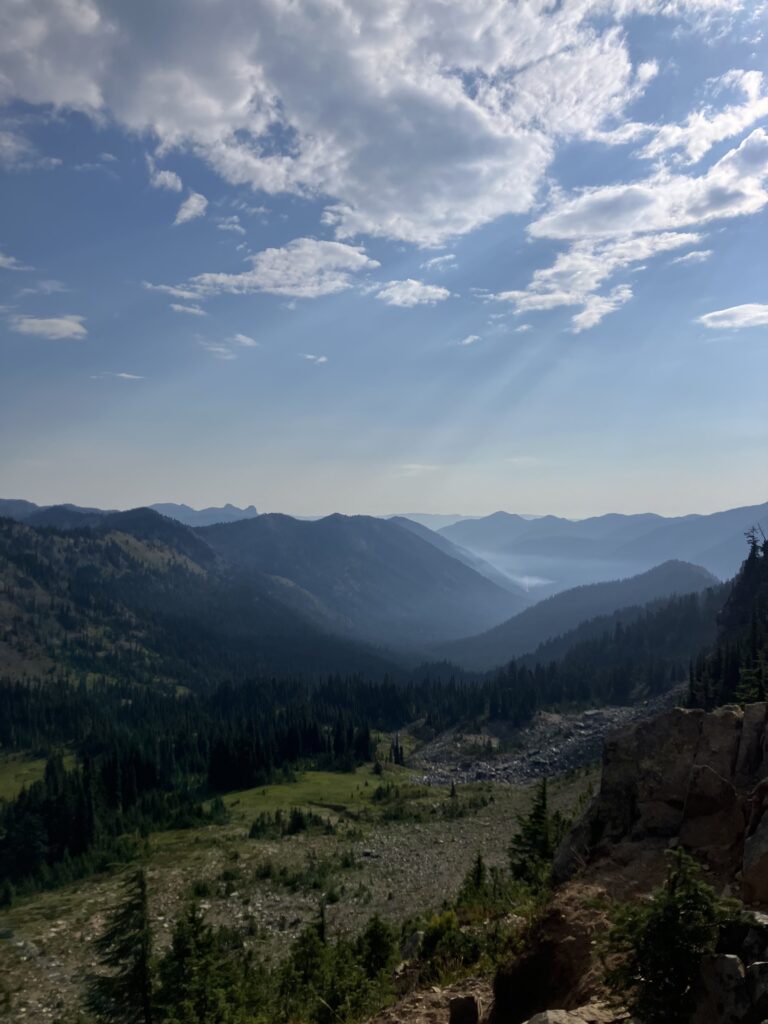
The rest of the section into Snoqualmie was not particularly exciting, mostly just old logging lands. I wasn’t planning on staying in Snoqualmie, but I did need to get a couple days more food and hoped to get coffee and/or lunch. Instead, I walked into town and a woman, after confirming I was coming off the PCT, asked, “Have you heard about the power outage?” I obviously had not. Apparently, the Snoqualmie substation had been struck by lightning in the storm. So I guess for Snoqualmie it was a bad storm. Fortunately there was one building on a generator that had power, and it had a coffee shop and small, but expensive, market. So I was able to charge my things and get some food, though it was not quite the exciting town stop I’d been expecting. Fortunately, the section between Snoqualmie and Stevens Pass was much more scenic. It was a long, slow climb out of the pass, into the appropriately named Alpine Lakes Wilderness. This section was characterized by long rocky ridges, with deep blue glacial lakes in the basin below. A lot of the trail felt more like New England, with plenty of rocks and roots.
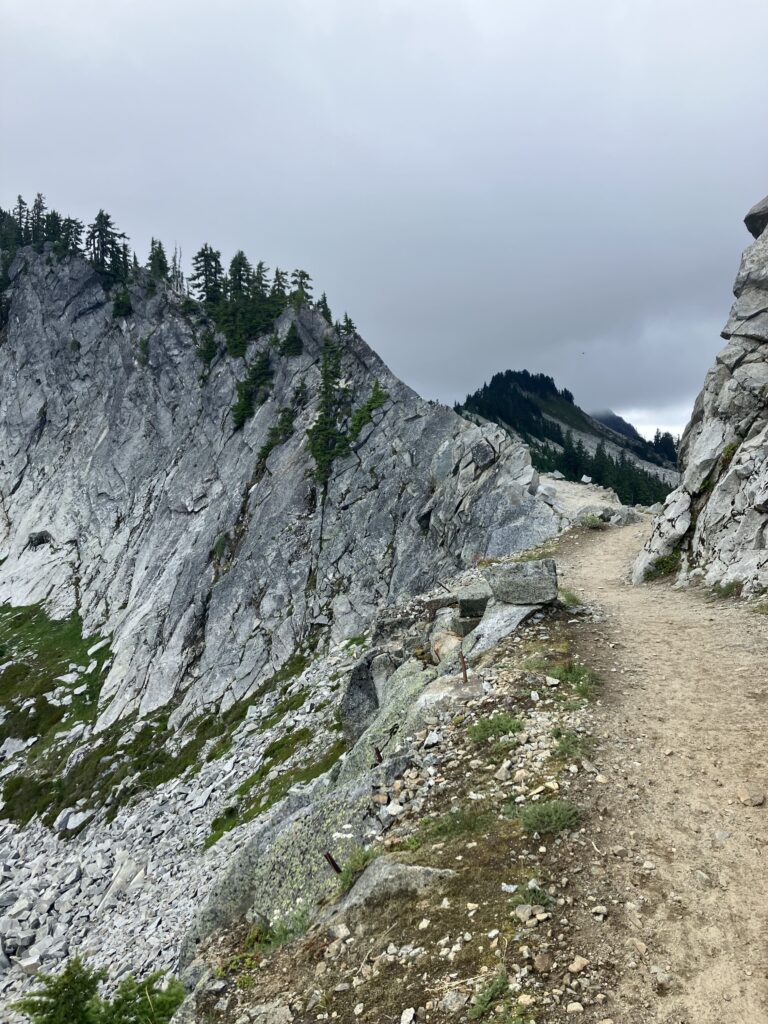
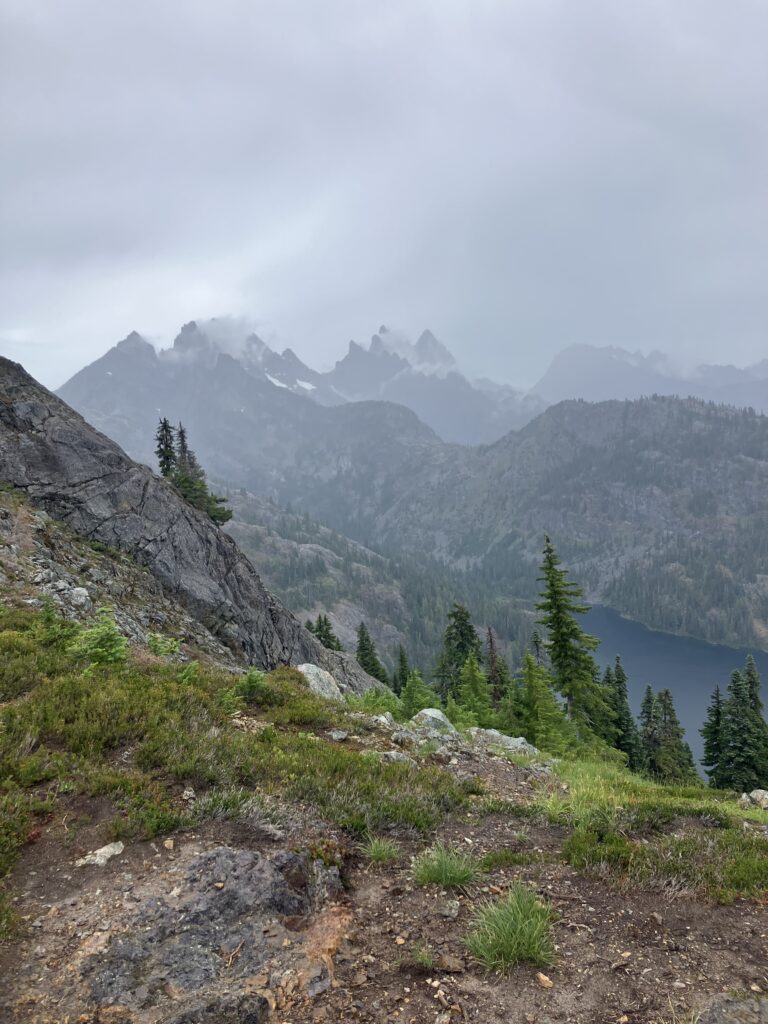
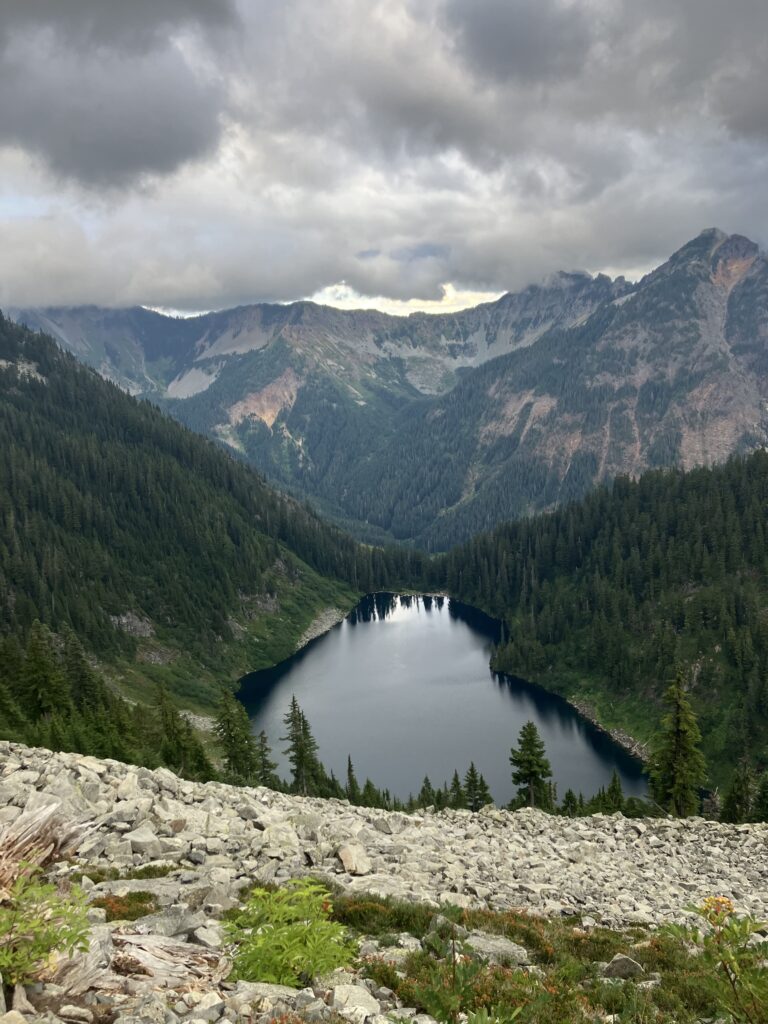
This seemed to be a very popular section hike, and it was clear to see why. It was a 70 mile, relatively accessible stretch of trail, near Seattle, with basically all of the miles offering something to see. I met a lot of people out on their first longer backpacking trip, including a family from Brookline, who’d heard that this section was a good one from another hiker at an AMC hut in New Hampshire. Since I had plenty of time until Ben would arrive to meet me, my days were relatively relaxed and easy. The very not-August-like weather continued, but I only got drizzled on every other day. I would still take it over the heat.
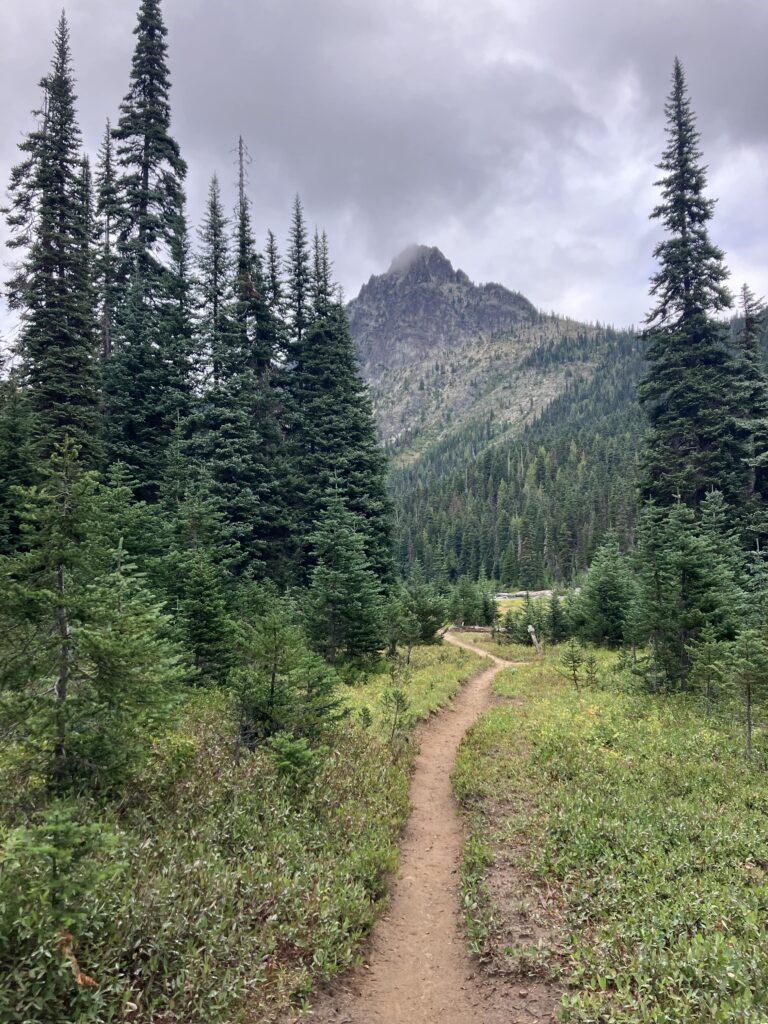
Having not really gotten a town stop in Snoqualmie, I was happy to get to Stevens Pass and was ready for a break. I got a hitch into the town of Leavenworth – a fairly notable tourist town styled, down to the McDonald’s, as a Bavarian village. This seemed like a worthy last real town of my trip. The trail was largely closed for a series of fires north of Stevens Pass, so following Leavenworth, I would embark on a public transit odyssey across eastern Washington to make my way to the last thirty miles of trail to the border, almost to the end of the road.