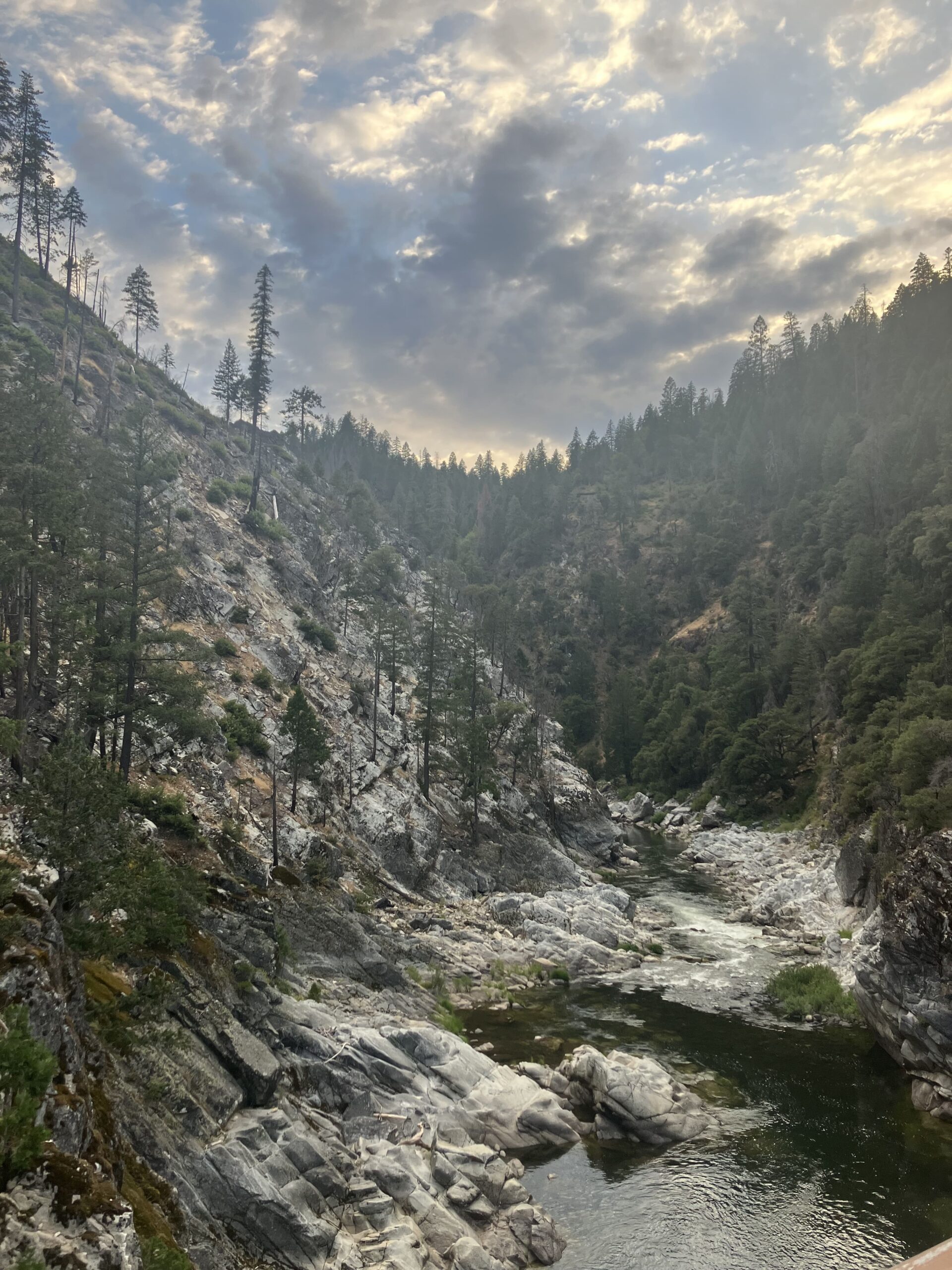
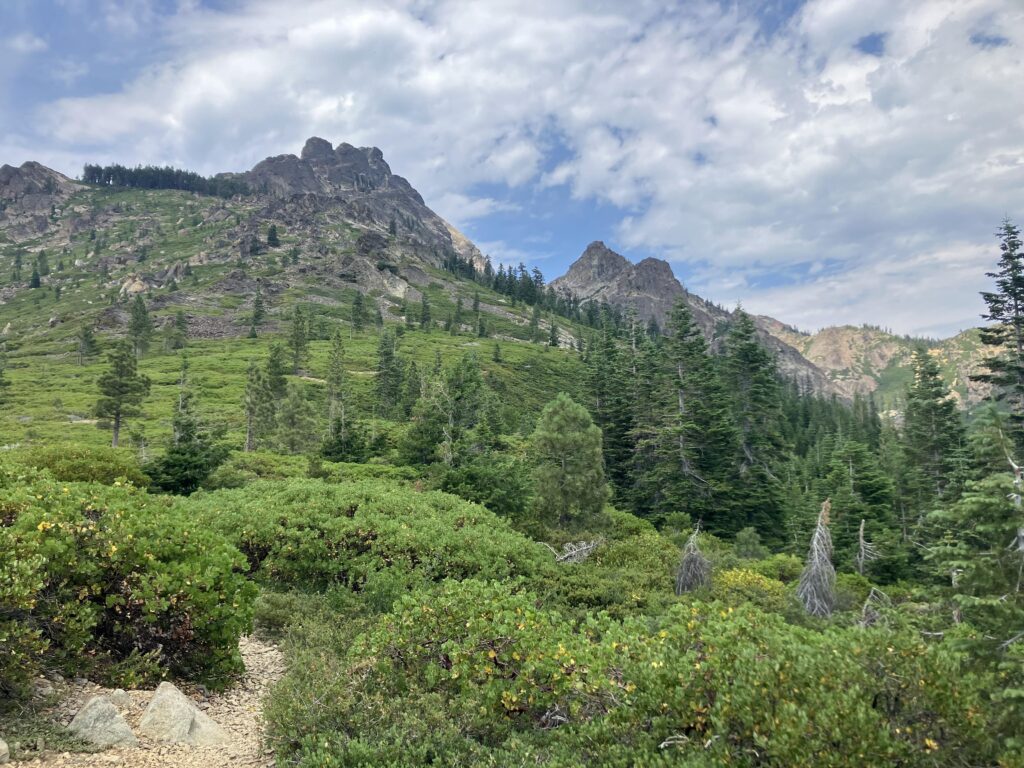
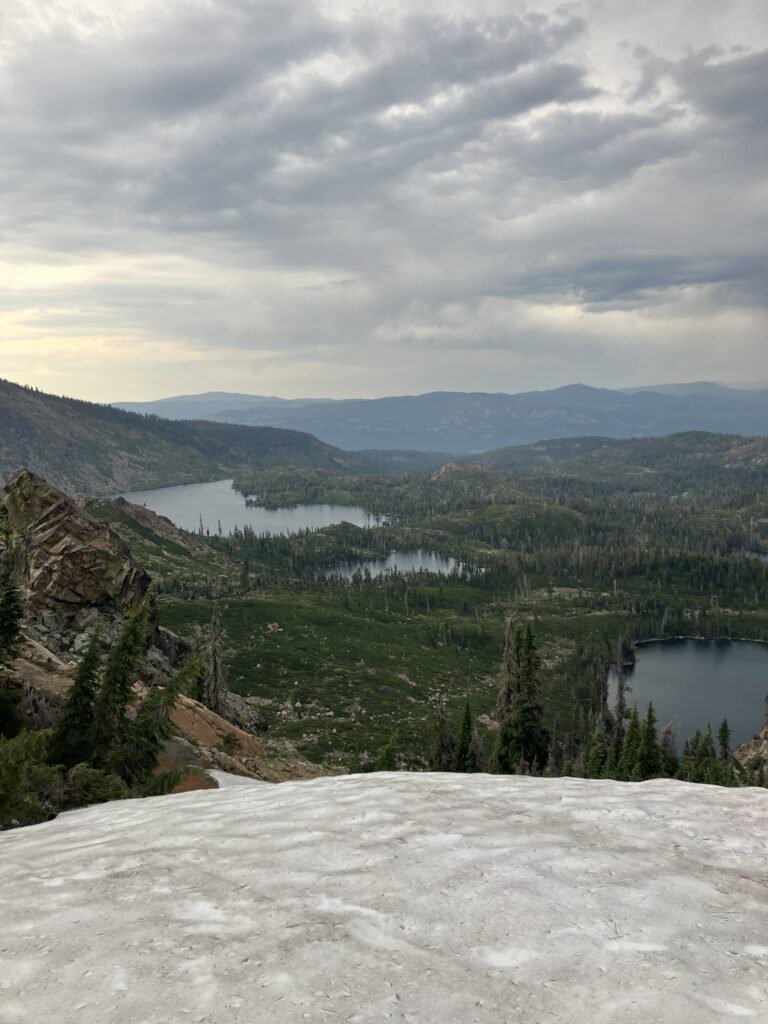
While it had been great to see Ben, leaving again was incredibly difficult and we were both pretty down when he brought me back to the trail on Saturday. To make matters worse for me, it was still hot and I had a long climb ahead. To make matters worse for Ben, he had to go to Sacramento. At the trailhead, some hikers were looking for a ride into town, and Ben offered to drive them, forcing us to not have too long and drawn out of a goodbye, which was probably for the best. I focused on the climb in front of me, which was up the Sierra Buttes, a distinctive, spiky mountain that had been looming for miles. After circling the mountain, the trail went into the Lakes Basin region, though sadly we only really went by one lake. Though it was sort of nice not to descend into the basin, after just climbing up, and the views of the lakes were nice, it was a bit infuriating in the heat to be so close and yet so far from the water.
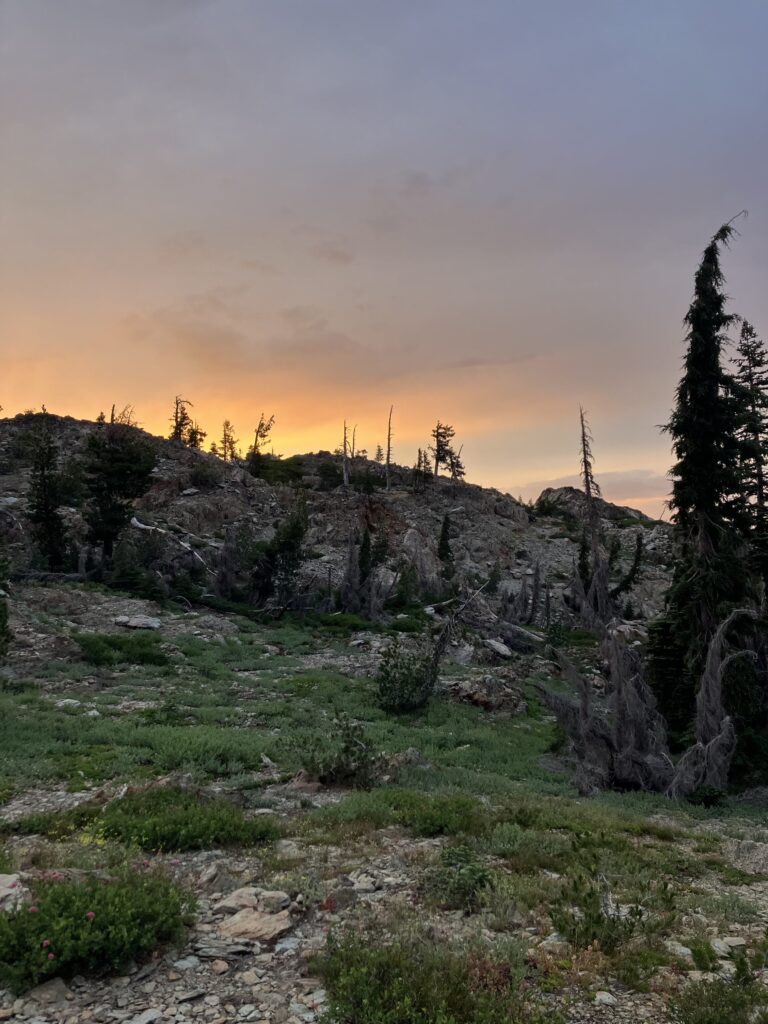
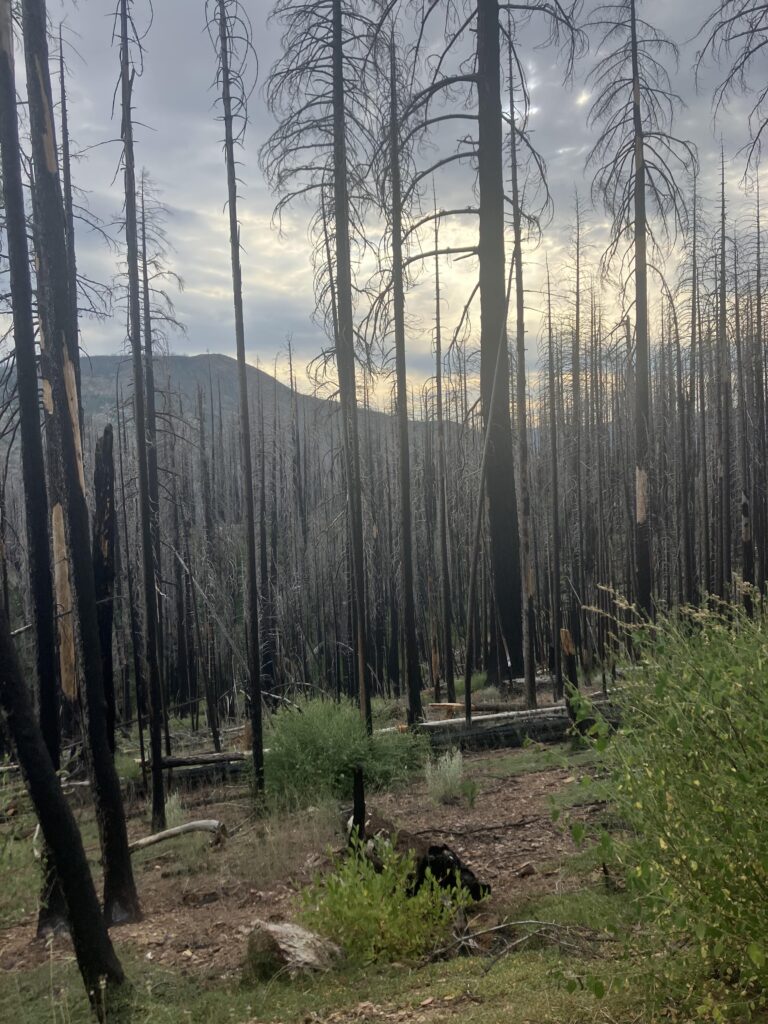
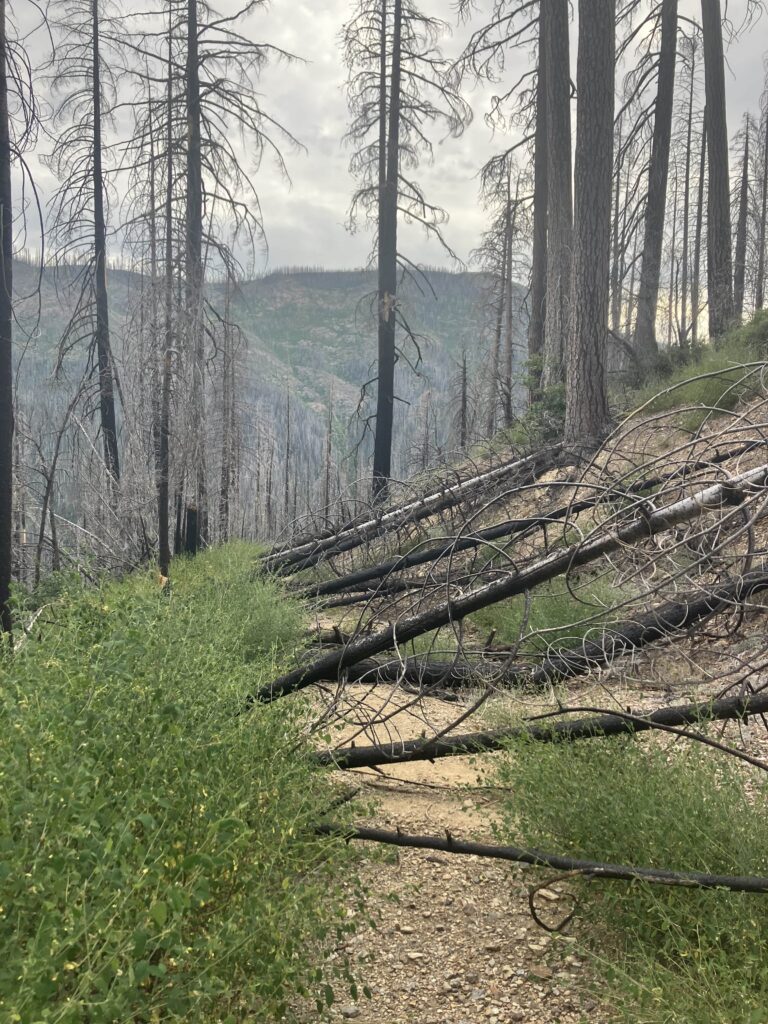
The next day, the sadness of missing Ben, after briefly getting to be together again, really hit me. This was not amazing timing, as I also began the long trek through one of the largest burned areas on the trail – the aftermath of the Bear Fire of 2020 and the Dixie Fire of 2021 (the largest single source fire in California history). I started going through the worst of the burned area late in the afternoon, so the heat and exposure wasn’t too bad. As I went along though, the trail got more and more overgrown and the number of fallen trees blocking the trail kept increasing. Eventually it got so bad that the recommendation from other hikers was to cut over to a dirt road that paralleled the trail for about 3 miles. The road was also overgrown and full of fallen trees, but it was at least easier to follow. As I continued climbing over trees, my mood worsened. It was the end of a long day, I missed Ben, and I was tired of this. I don’t generally complain about a trail just because it is hard. But hiking through a burn isn’t hard in a fun or satisfying way. It is hot, tedious, and depressing, knowing that a few years ago, this was an alive and beautiful forest. I finally made it down to the bottom of the valley, to a nice, though crowded, tent spot by a river. (The other thing about burn zones is that you don’t really want to camp amidst the dead trees that might fall on you, so camping options are much more limited than usual.)
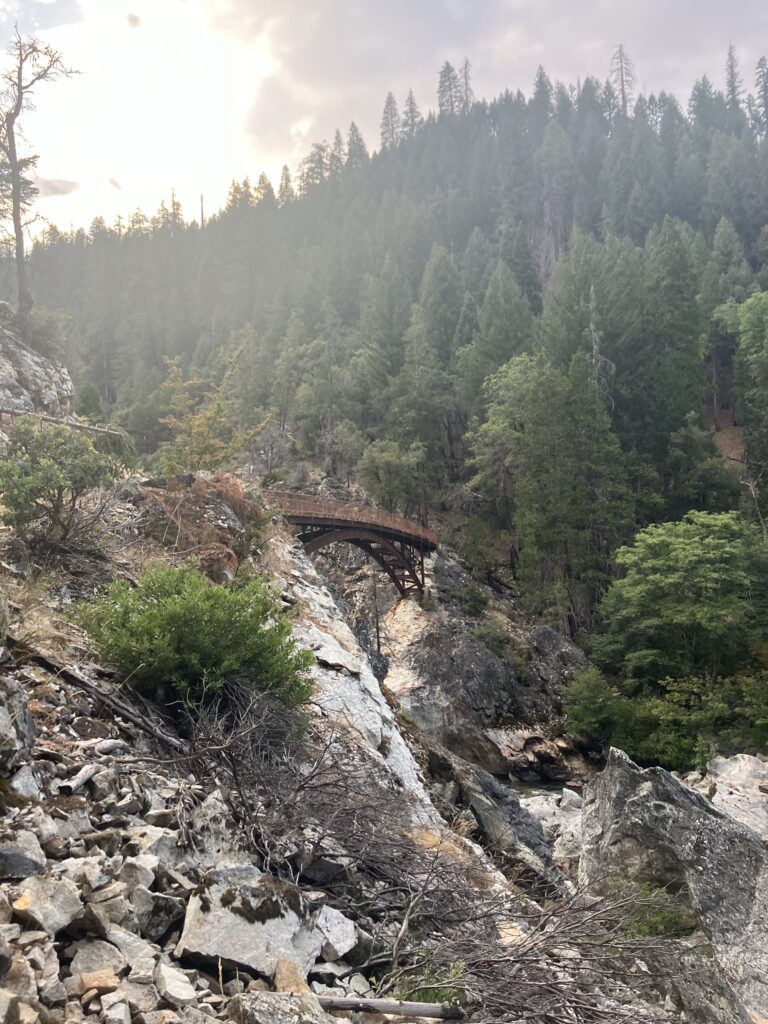
The next morning, the trail immediately climbed back up – a ten mile, 3500 foot climb. Though long, it wasn’t too bad and the fire seemed to have caused less damage on this side of the river. Additionally, once up on the ridge, it was a little cooler. Still, by midday the heat had grown oppressive again. We got to a road crossing that led down to a lake – and a restaurant and bar beside the lake. This was a popular stop with hikers, and I hadn’t been planning on stopping, but sitting in the heat, I changed my mind. It seemed stupid to keep hiking unhappily through, when I could go have a snack and a drink by a nice lake. It wasn’t a very busy road, but I didn’t have too much trouble getting a ride in either direction. The people at the lake resort were very friendly, used to hikers. I have always been a lightweight who doesn’t drink much, but now I was a fifteen-pounds-lighter weight who almost never drank, so one cider went a long way. I returned to the trail, cooler evening air on the way, in a better mood.
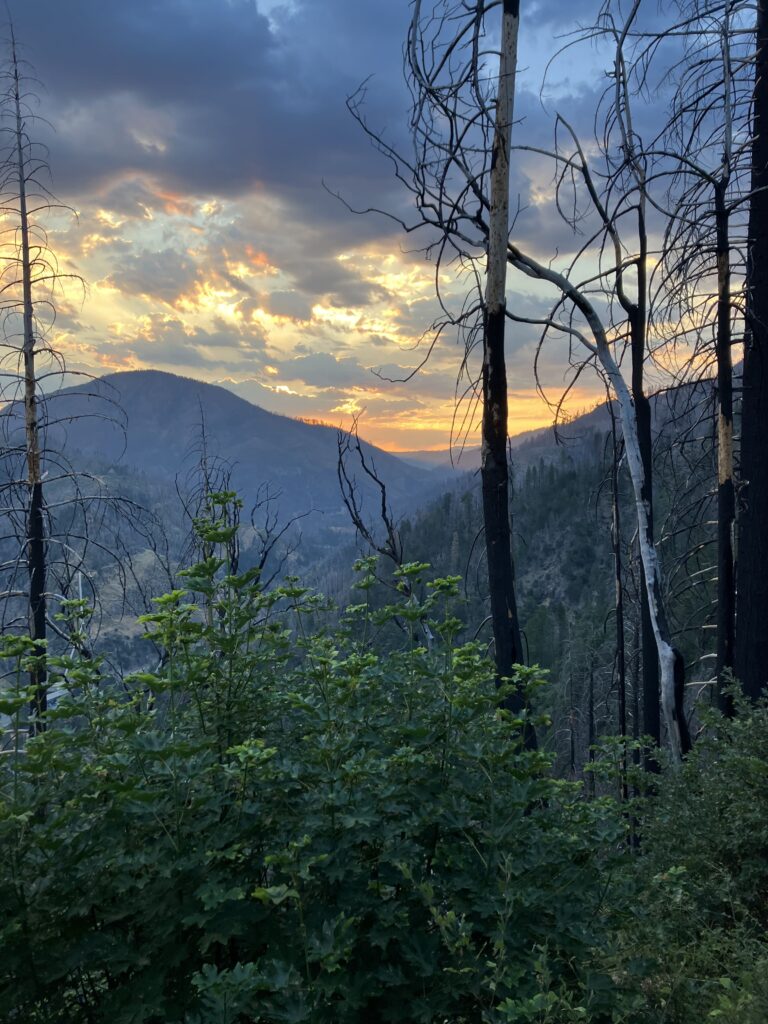
I started the next day with a steep and rapid descent into the “town” of Belden. The trail was once again very overgrown, this time with some poison oak thrown in. I’m not really sure what is up with the PCTA and trail maintenance. Many sections are fine, especially the more popular parts in the Sierras, but a lot of the trail is horribly overgrown and seemingly unmaintained. I spent the whole desert section getting my legs torn up by the thorny bushes taking over the trail. A local we met back in the desert told us that basically no trail maintenance had happened in 2020 or 2021 and now there was a huge backlog. For such a popular trail, not to mention one that collects permit fees from hikers, I definitely expected better. Anyway, Belden seemed to consist of a campground/motel/general store called the Belden Town Resort and little else. Since I was coming through early in the morning, I didn’t stop, but it seemed like a real throwback. I focused instead on starting my next climb while it was still cool-ish.
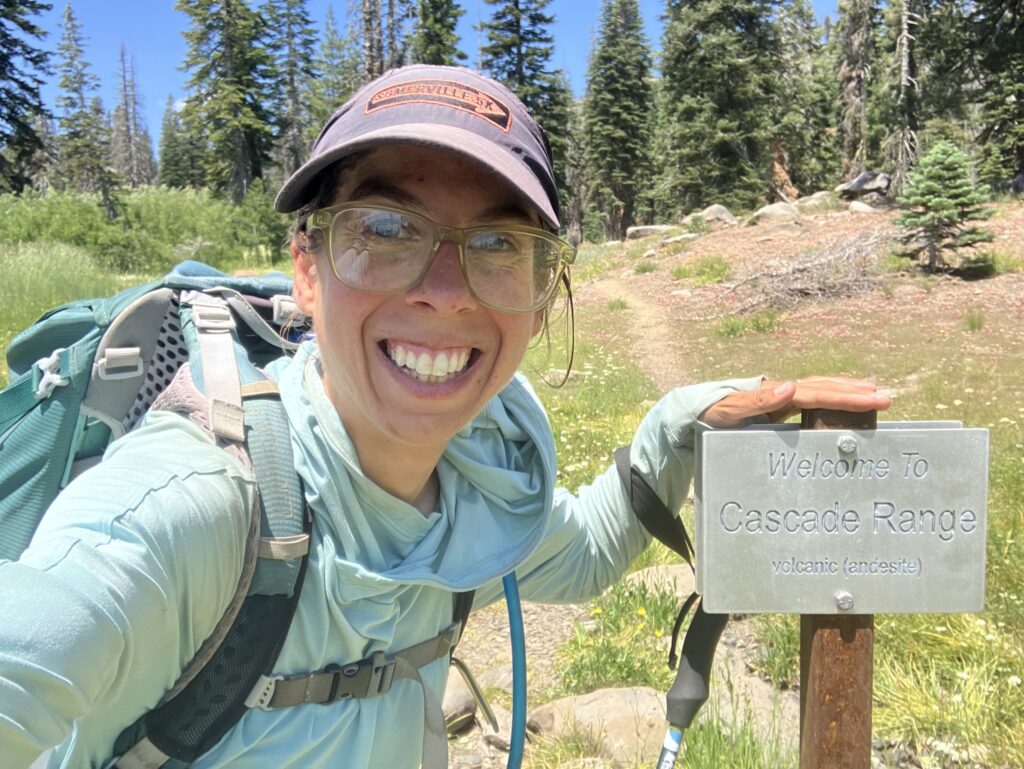
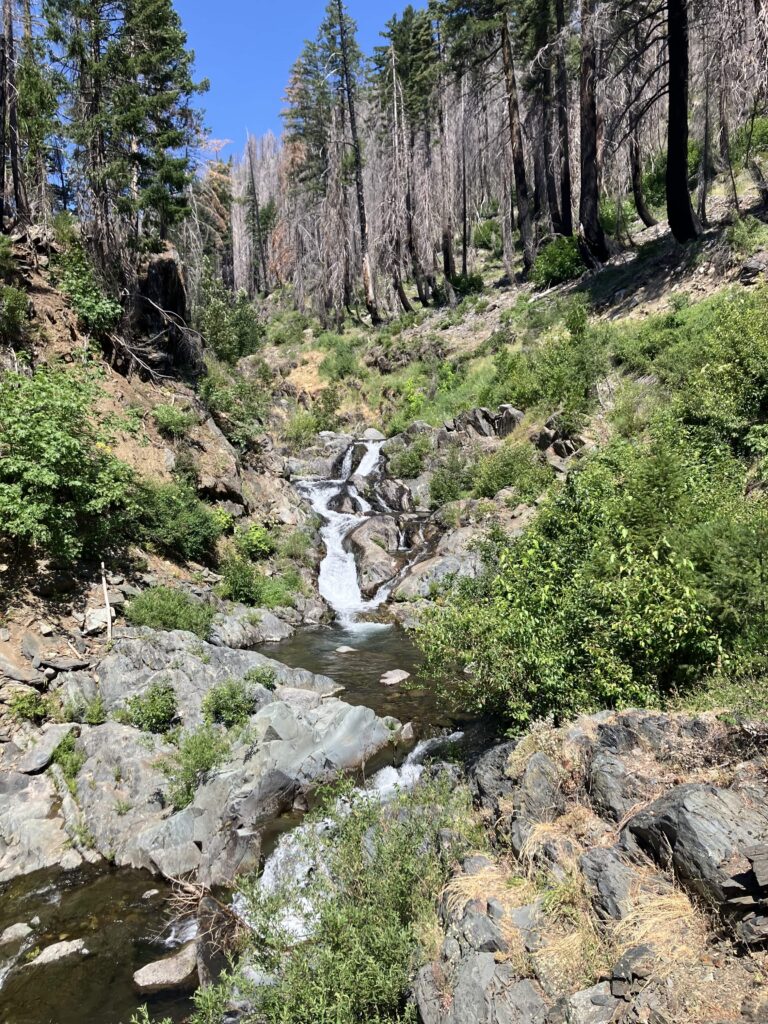
Once again, the trail immediately went back up, this time with a twelve mile, 5100 foot climb. Again, it wasn’t too bad, relatively gradual, though the flip side is that it seemed to go on forever. Luckily there were also plenty of streams and small waterfalls for most of the way, perfect for keeping cooler. By this time, I’d embraced the strategy of dunking my whole shirt in the water and hiking on, and this usually kept me pretty cool for a few miles. There were also some exciting milestones near the top of this climb. We hit the 1300 mile marker, and we crossed the divide between the Sierra Nevada mountains and the Cascades.
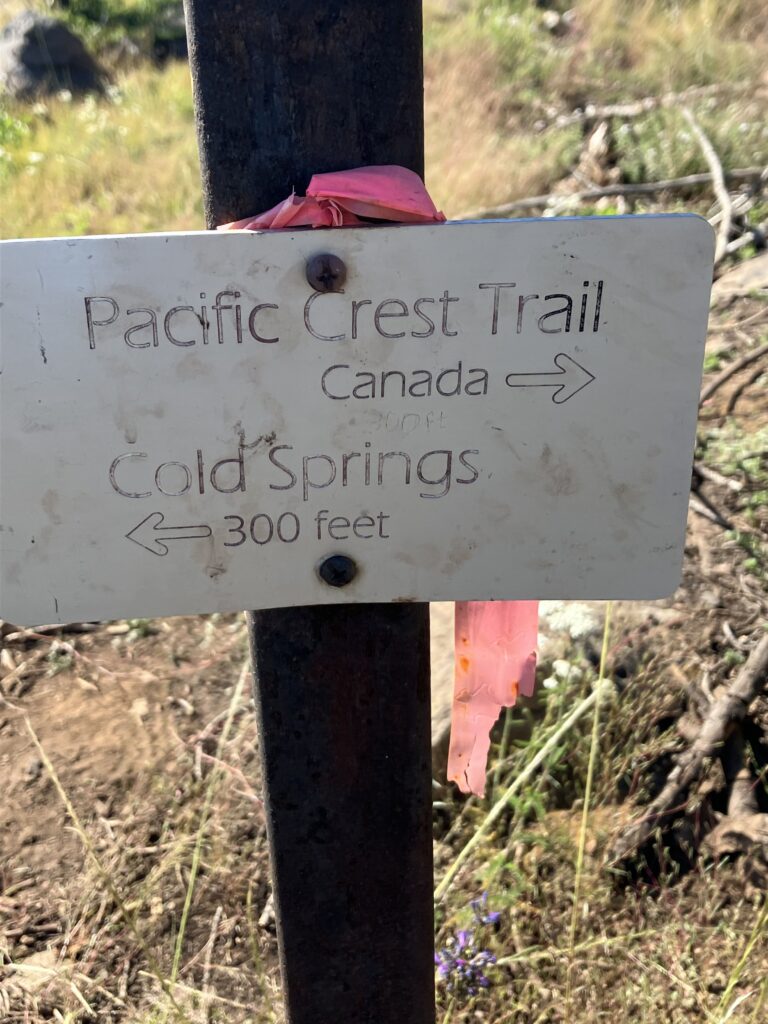
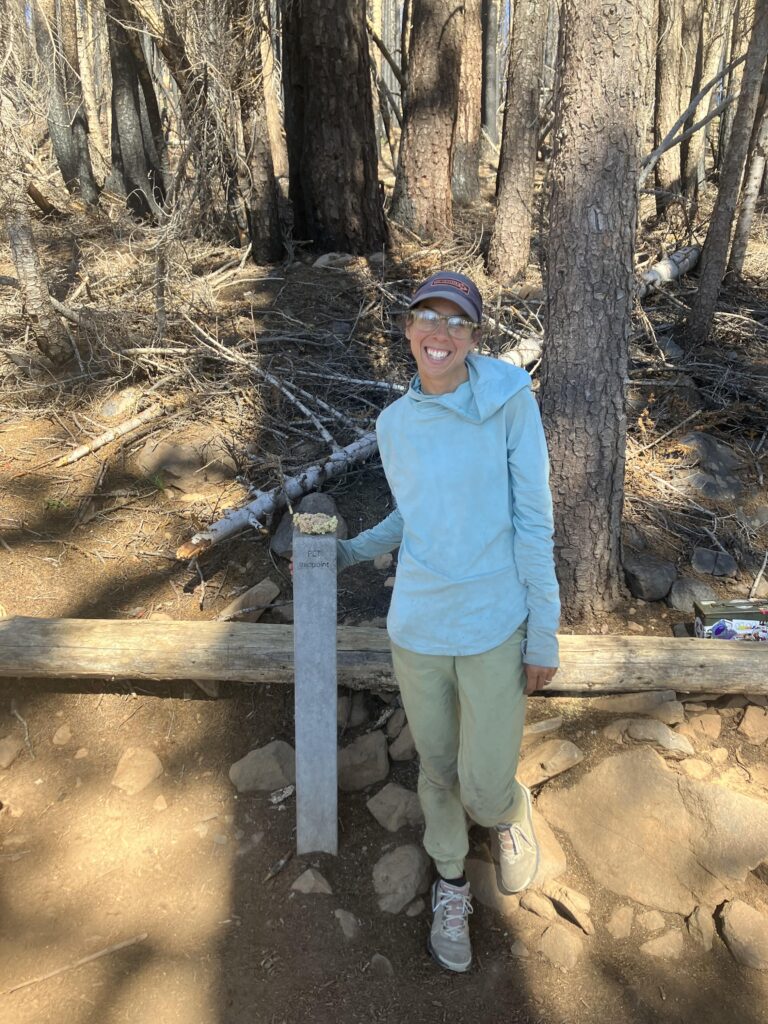
The next day was a town day, sort of. I decided to go in and out of Chester, rather than staying. Chester is just before Lassen Volcanic National Park, where a bear canister is required to camp. There are only about nineteen miles of trail through the park, so hiking through is easy enough, but leaving from Chester would require either doing a fifteen mile day and stopping at the park border or doing a thirty four mile day to get to the other side. I didn’t want to do either of those things, so I would just go into town to get groceries and some lunch, and then do a few more miles on trail so that I could have a normal day through Lassen. As I came down the hill towards the town, I hit another milestone: the halfway point. This was marked, rather unimpressively, to be honest, with a concrete pillar. Halfway through and still several hundred miles of California to go.
The area closer to the road had burned extensively. We meandered through what had clearly once been logging land, but was now little more than burned stumps. Not long before the road was a creek that had been marked in the guide with a bridge icon, but there was no bridge to be found. I checked again – the bridge had also burned in the fire. It is really cool to wade through a muddy swamp creek when you know that in about twenty minutes you will be asking a stranger if you can ride in their car. (I did end up changing into different pants before the road, to seem like slightly less of a mess.) Chester turned out to be just about the friendliest town on the trail yet. When I got to the trailhead, there was a cooler of cold drinks and a woman already there who asked if I needed a ride. She then additionally gave me some freshly sliced watermelon. At the grocery store, there were a number of other hikers, along with the telltale signs that hikers had been there, namely empty spaces on the shelves where certain things should be, like Clif bars. Outside the store, a group of hikers was strategizing how they would do a 24-24-24 challenge. (Thru-hikers LOVE “challenges.”) This one involved drinking 24 beers and hiking 24 miles in 24 hours. While they were doing this, another woman came up and offered to give them a ride to the trail. They offered for me to join, but I really wanted coffee, so I decided to chance getting my own ride later. That turned out to be totally fine, as after getting lunch at the bakery across the street, I had not even put my thumb out when an older man pulled over and offered me a ride. He was a little crazy, and a little old fashioned (he asked me what my husband did for work, and I told him and also helpfully volunteered what I did for work), but he was nice and he got me back to the trail.
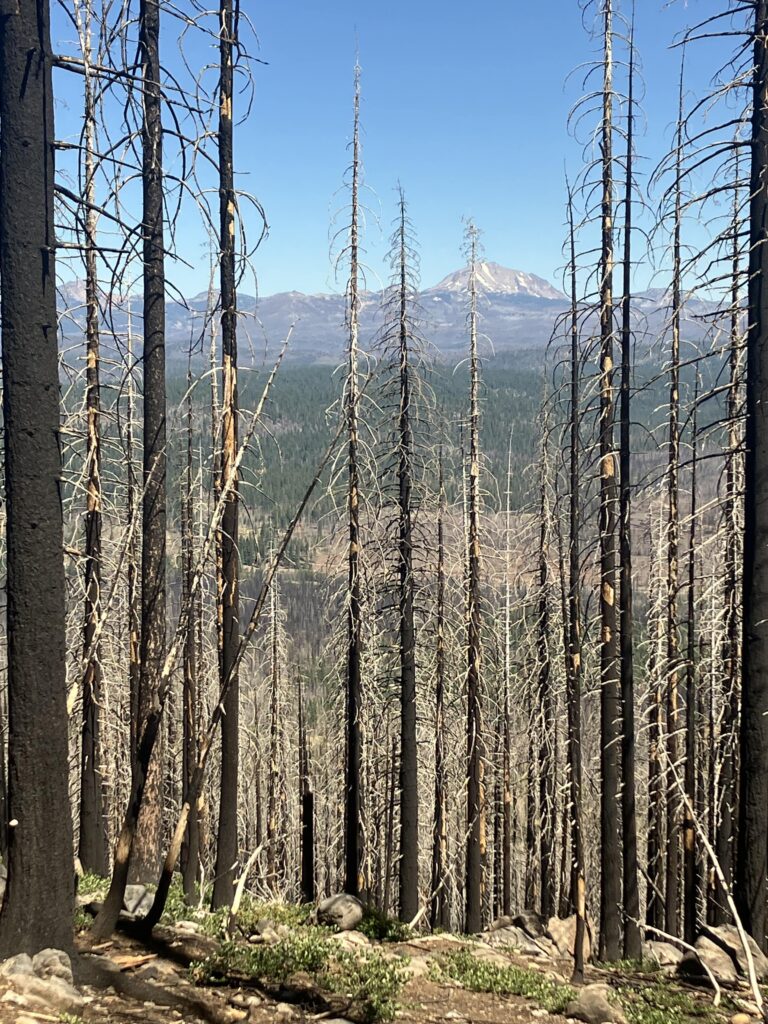
The group from the grocery store was sitting at the trailhead drinking some number of their 24 beers. I started off down the trail, mood bolstered by caffeine and extra food. The burned area continued for a couple miles, but soon the trail went through an area that had seemingly been spared from the fire. With the cooler evening air and the healthy, shady, green trees, it was so much nicer than the trail we had been hiking through that I almost wanted to cry. I know that I don’t live here, I’m only walking through. This isn’t my home, my backyard woods. We are certainly seeing the effects of climate change in New England, but mostly we have the luxury of complaining that it rains too much. I talk to the locals, the people who give me rides, the people who work at the restaurants, the people just out for the day or the weekend. They all talk about the fires the same way and use the same word: devastating. One year, they had a beautiful forest to hike in, the next year, they didn’t. The grief here is obvious, and I understand. I think about what it would be like if Franconia Notch burned, or the Kancamagus Pass, or just the woods by the river by our house. It would, of course, be devastating.